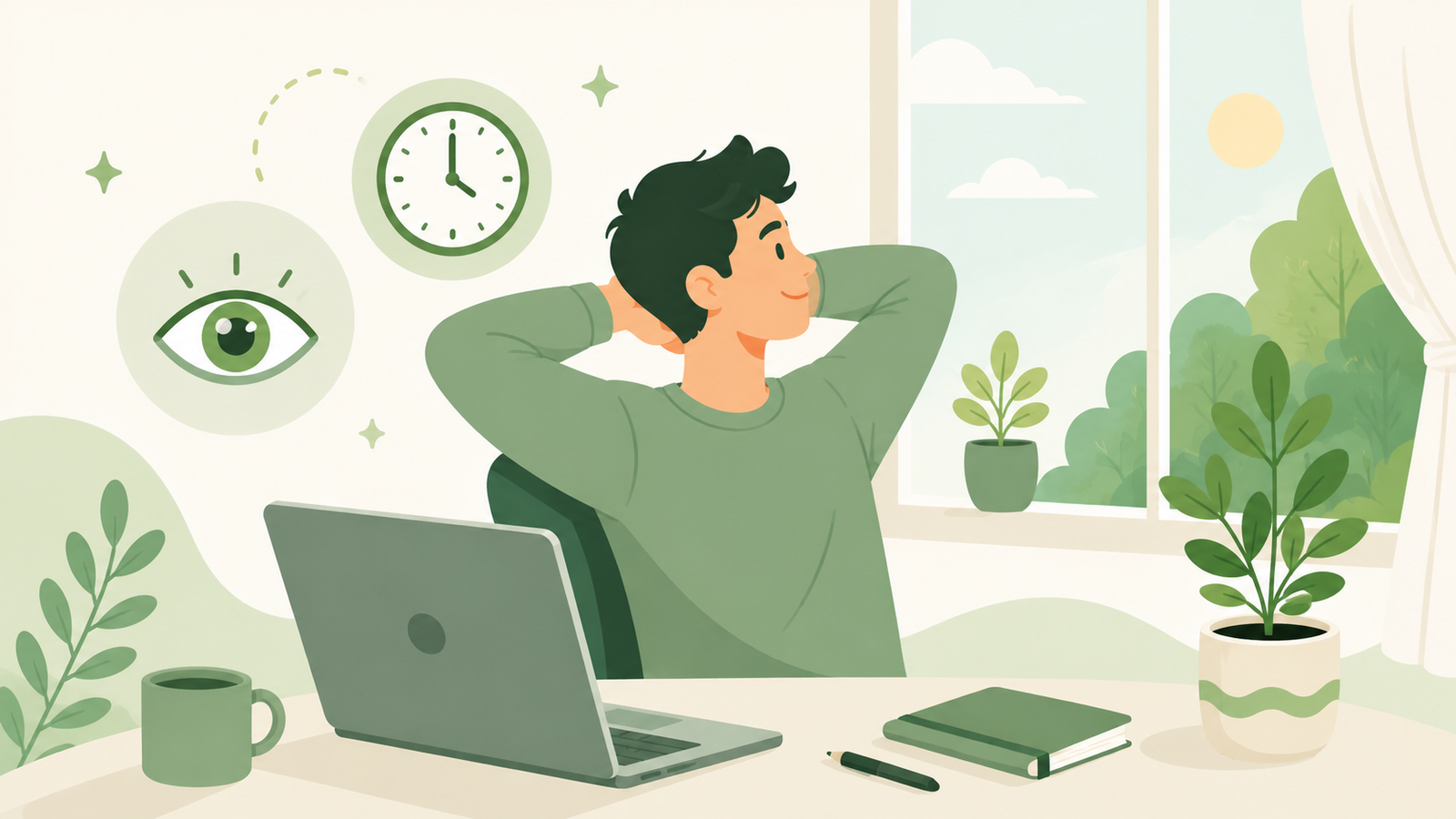
Reflect on your day. Phone the first thing out of bed. Laptop at work. TV in the evening. And you’re scrolling before bed. If you total up your screen time for the day what would you think? For most of us we are surprised.
Screens have taken over a large part of our day and our eyes are the main sufferers. The good news is you don’t have to get rid of your devices to fix it. A few easy changes can protect your eyes and reduce that which is unnecessary, without completely changing your life.
Excessive Screen Time Issues.
Our eyes did not evolve to sit for hours at close range in front of bright screens. When you are focused on a screen for long stretches of time you also blink less, your eye muscles remain tight, and your eyes dry out at an accelerated rate.
Over time this results in what doctors term digital eye strain (also known as computer vision syndrome) a very present issue for those who work on laptops, scroll through their phones, or watch series for long stretches.
Common Signs of Digital Eye Strain
Not sure if this applies to you? Watch out for these signs:
- Dry, itchy, or watery eyes
- Blurred or double vision after screen use
- Frequent headaches
- Neck, shoulder, or back pain from poor posture while using devices
- Trouble focusing on objects after long screen sessions
- Feeling more tired than usual by the evening
If a few of these sound familiar, it’s a sign your eyes (and body) are asking for a change.
Simple Ways to Reduce Screen Time
You don’t need a strict digital detox to make a difference. Small, realistic changes work better long-term.
1. Set App Limits
Most phones already have built-in screen time trackers. Set a daily limit for apps you tend to lose time on, like social media or video apps.
2. Create Screen-Free Zones
Keep certain areas — like the dining table or bedroom — as no-screen zones. This alone can cut a surprising chunk of unnecessary scrolling.
3. Replace the Habit, Not Just Remove It
Instead of just “cutting down,” swap screen time with something else — a short walk, reading a physical book, or a quick chat with someone at home.
4. Turn Off Non-Essential Notifications
A huge amount of screen time comes from checking notifications out of habit. Turning off the ones that aren’t urgent reduces how often you pick up your phone.
5. Use Grayscale Mode
Turning your phone screen to black and white makes it visually less appealing, which can naturally reduce how long you want to keep scrolling.
6. Set a “Last Screen” Time at Night
Try to stop using screens at least 30–60 minutes before bed. This helps both your eyes and your sleep quality.
Eye Care Habits That Actually Work
Reducing screen time helps, but for most people, screens aren’t going away completely — especially with work and studies involved. So it’s just as important to protect your eyes while you’re using them.
Follow the 20-20-20 Rule
This is the golden rule eye doctors recommend: every 20 minutes, look at something at least 20 feet away for 20 seconds. It gives your eye muscles a quick, much-needed break.
Blink More Often
When we focus on screens, we blink far less than normal — sometimes half as much. This dries out the eyes quickly. Make a conscious effort to blink more, especially during long sessions.
Adjust Brightness and Distance
Keep your screen brightness close to the light level of the room around you, not blindingly bright or too dim. Also keep your screen about an arm’s length away from your face, and slightly below eye level.
Use Blue Light Filters
Most phones and laptops have a built-in “night mode” or blue light filter. Turning this on, especially in the evening, can reduce eye strain and help you sleep better too.
Keep the Room Well Lit
Using a screen in a completely dark room forces your eyes to work harder to adjust between the bright screen and the dark surroundings. A softly lit room is much easier on your eyes.
Get Regular Eye Checkups
Even if your vision feels fine, a yearly eye checkup can catch small issues early — before they turn into bigger problems.
Eating for Healthy Eyes
What you eat also plays a quiet but real role in eye health. A few things worth including in your diet:
- Carrots and sweet potatoes – rich in vitamin A, good for overall eye health
- Leafy greens like spinach – contain antioxidants that protect the eyes
- Fish like salmon – high in omega-3 fatty acids, which support tear production and reduce dryness
- Citrus fruits and berries – packed with vitamin C, which supports eye tissue health
Staying hydrated also helps prevent dry eyes, especially if you already spend a lot of time on screens.
Helping Kids Manage Screen Time
If you have kids at home which is the case for most of us, pay more attention to screen time as their eyes are still growing. Also try out these tips out:.
Set time limits for daily screen use by age group.
Promote outdoor play which is associated with better eye health in children.
Keep screens at proper arm’s length and at eye level for study or online classes.
Apply the 20-20-20 rule also during homework or class breaks.
How much screen time is out of question for most people?
While there isn’t a set number which applies to all, experts do put forth that non work related screen time should be around 2 hours a day at most and also that we break from the screens during longer use.
Do blue light glasses really work? They may ease some of the strain and improve comfort for some, but they are not a solution to the root issues like the 20-20-20 rule and proper screen distance. Does screen time cause permanent eye damage? Digital eye strain in itself usually does not cause permanent damage, what we see instead is that by ignoring the symptoms for the long term, along with poor postures and lighting which we have at home or work we cause long term discomfort and vision issues.
The Bottom Line
You don’t need to give up your phone or laptop to protect your eyes — you just need a few mindful habits. Take regular breaks, blink more, adjust your lighting, and give your eyes real rest, especially before bed.
Small changes, done consistently, add up to a big difference for both your eyes and your overall well-being.